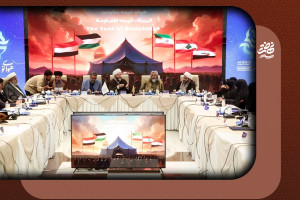
Short-form stories, young filmmakers and 170 competing works in Tehran
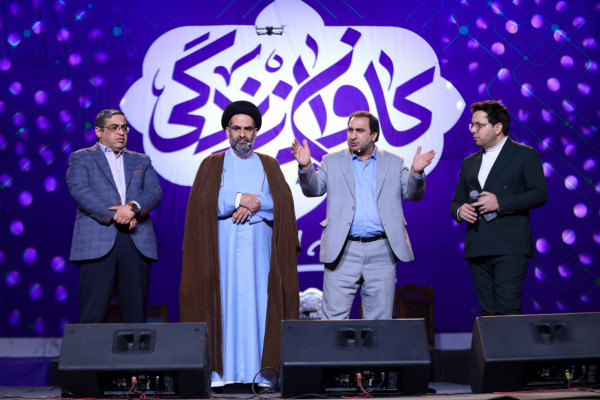
The 15th 100 Film Festival Has Concluded
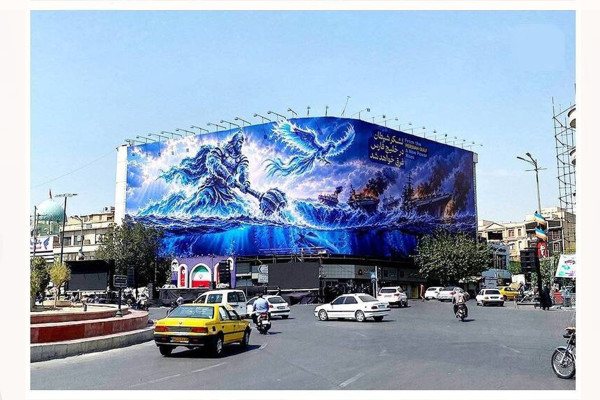
Global Reactions to Enghelab Square Mural
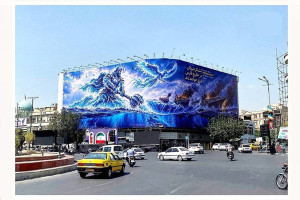
The new mural at Enghelab Square, depicting Iran's attack on a U.S. warship, triggered widespread reactions in American, European, and Hebrew-language media, mostly interpreted as a serious warning from Iran against any missteps in the region.
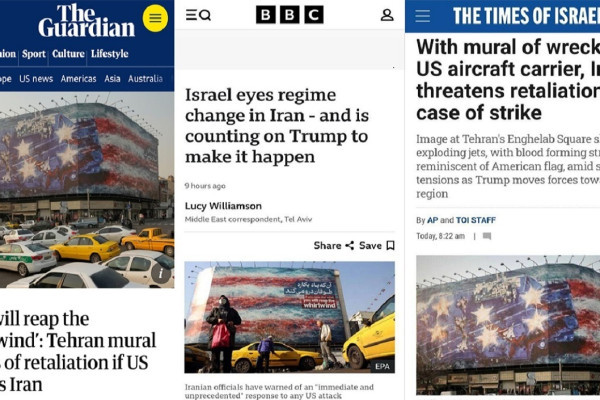
On 5 Bahman 1404, the new mural decorated Enghelab Square, showing a symbolic attack on a U.S. aircraft carrier. Its impact extended beyond Iran, attracting attention from foreign media including the U.S. and Europe, and quickly becoming a topic in Hebrew-language media and social networks.
Media outlets such as The Guardian, Associated Press, CNN, Euronews, Newsweek, and The Jerusalem Post focused on the mural. The widespread coverage emphasized that this symbolic image represents a media war reflecting tensions between Iran and the U.S.
The Guardian: Blood traces on the U.S. flag
Western media described the mural as a threatening message. Iranians, through this artwork, sent a warning to the United States, depicting the U.S. aircraft carrier under attack and explosion, with blood traces likened to the U.S. flag.
Associated Press: Warning to the U.S. in the frame
AP highlighted the written phrase as an implicit warning regarding possible military actions against Iran.
CNN: U.S. attack repelled by ballistic missiles
CNN reported that any U.S. action would face retaliatory attacks from Iran, and Iranian citizens emphasized their readiness to defend with ballistic missiles.
Euronews: Threat in the language of imagery
Euronews viewed the mural as a symbol of Iran’s warning, stating that the image is not just art but a medium for a symbolic message to the international community.
Newsweek: Conveying the message through visual symbols
Newsweek highlighted the visual elements of the mural, stressing that they carry the main narrative and indicate U.S. military maneuvers toward Iran.
BBC: Immediate and unprecedented response
BBC noted that Iran symbolically declared it would respond swiftly to any U.S. attack, warning against deploying warships to the Gulf.
Al Jazeera: Iran’s warning language for Americans
Al Jazeera considered the mural a clear warning to Americans, coinciding with the movement of U.S. warships toward the Gulf.
CBS News: Overt threat against the U.S.
CBS emphasized that the mural constitutes a direct threat against any potential U.S. military action.
Times of Israel: Strong response to attacks
Hebrew media pointed out that Iran used the mural to warn Americans of possible retaliation.
Der Olam Haredim: Bloody message from Tehran
This Hebrew-language outlet described the mural as a “bloody message from Tehran,” a formal warning to U.S. aircraft carriers.
Kikar HaShabbat: Official message from the government
This outlet linked the mural to ongoing political and military developments, suggesting Iran is preparing for a potential conflict with the U.S.
Jerusalem Post: Clear threat to the U.S.
Jerusalem Post stated that the mural represents a direct warning to the U.S., following threats and potential attacks, clearly conveying Iran’s message.
2026-02-09


T
T